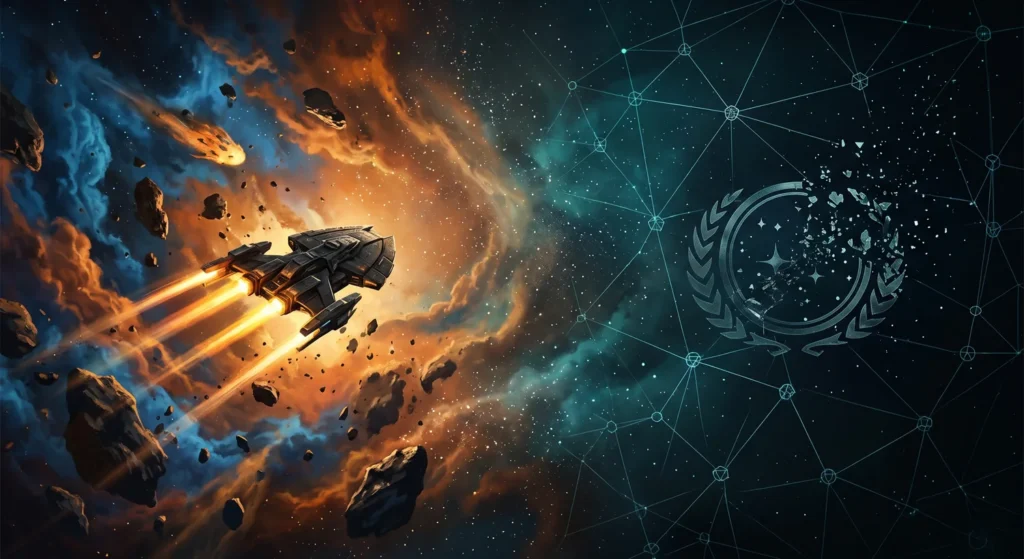
If you’ve ever watched Star Trek Beyond, you might remember the exchange between Nyota Uhura and the villain, Krall, about unity. Krall replied:
The world that I was born into was very different from yours, Lieutenant. We knew pain, we knew terror. Struggle made us strong - not peace, not unity. These are myths the Federation would have you believe.
Later, when he gets his hands on the Abronath weapon, he spits one final line at her:
Unity is not your strength. It is a weakness.
In the end, the Federation arrives and rescues Captain Kirk and his crew. But happy endings like that only happen on screen.
Now, think about yourself.
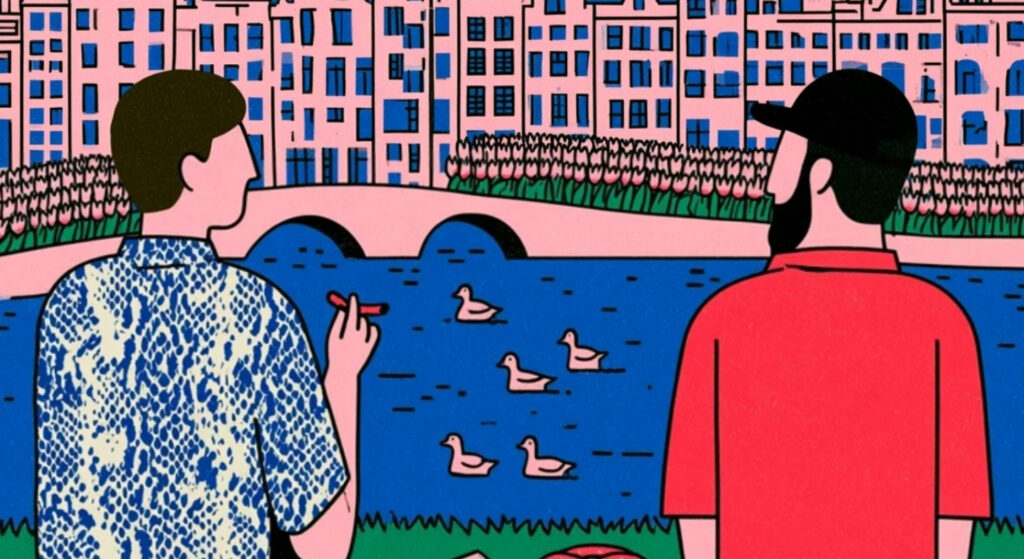
You choose to study through blood, sweat, and tears. You spend countless hours alone figuring out your career path, your way of life, and your philosophy of the world. You hone your craft. You love visual storytelling, even if you despise the commercialization behind it. You choose art. You choose to draw. Eventually, a production house notices your work and hires you to design and animate. Along the way, you meet like-minded people - a community bound not by empty slogans, but by distinct skills, shared passions, and individual excellence.
Your team starts winning awards. Then, a construction firm approaches you, asking if you’d be interested in urban design. Why? Because they see a rare structural discipline in your art - consistent patterns built over five years of quiet practice. You still have much to learn, yet just like that, you step into a meaningful role: designing urban spaces, the very foundation where families take root.
Now, imagine Another You.
Another You also chooses art, but focuses entirely on horizontal growth - socializing, networking, and connecting with as many people as possible. Another You believes that “people skills” are the only skill needed to survive. Surrounded by a crowd that validates this belief, Another You spends endless hours chatting about life and philosophy, learning how to rally people around a shared fund provided by an art NGO.
Then, in the middle of it all, political and economic tides shift. Leaders cut funding; businesses tighten their belts and slash Corporate Social Responsibility (CSR) budgets because survival comes first.
Vertical vs. Horizontal Career Growth: Two Foundations of Survival
At its core, the contrast between You and Another You comes down to two fundamentally different philosophies of professional survival: vertical vs. horizontal career growth - and how you balance skills vs. networking. While horizontal growth expands your reach across networks, communities, and shared resources, vertical growth anchors your value in deep, irreplaceable mastery.
| Dimension | Vertical Career Growth (“You”) | Horizontal Career Growth (“Another You”) |
|---|---|---|
| Core Currency | Hard skills, structural discipline, and tangible craft. | Social capital, networking, and community influence. |
| How Connections Form | Earned organically through shared excellence and proven output. | Built proactively through socializing, rallies, and shared funding. |
| Growth Pace | Slow, solitary, and invisible in the early years. | Fast, visible, and externally validated right away. |
| Dependency | Self-reliant; value travels with the individual anywhere. | Dependent on external budgets, NGOs, or corporate CSR. |
| Resilience in Crisis | High - real capability remains in demand when markets tighten. | Fragile - collapses quickly when funding and sponsorship dry up. |
Neither You nor Another You is wrong. We all have the right to choose how we survive. The difference lies only in the foundation: You rely on your skills; Another You relies on unity. Just remember: when the screen fades to black and the funding runs out, the crowd goes home. Only what you have built with your own two hands stays with you.